Technical Branch
Maigret and the Dead GirlTechnical Branch is the police unit responsible for specialized photographic work in the investigation of the unidentified woman found at Place Vintimille. Its contribution is practical and visual: photographs preserve the scene’s evidence and make the victim recognizable beyond it, turning an image into a means of seeking her identity.
Identification work
At the scene, Maigret asks for identification personnel and photographers. A car from Technical Branch arrives, and the body is photographed before the doctor is able to turn it over for examination. The sequence gives the photography a distinct role in the investigation: it documents the body before the medical inquiry proceeds, rather than supplying a medical conclusion of its own.
The distinction matters because the immediate question of identity remains unresolved even as the physical circumstances of the death are examined. The doctor determines that the woman died from a fractured skull, but Technical Branch’s documented contribution lies in photography. The evidence does not assign the autopsy or later clothing analyses to the unit.
Photographic reconstruction
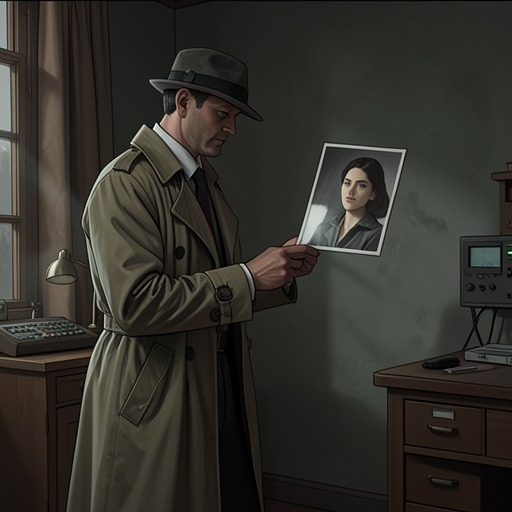
Maigret later requests more than a straightforward record of the dead woman. He asks for an image with makeup that will make her appear alive, and proposes combining her face with a model’s body. The assignment is urgent: he wants the result in time for the last edition of the evening papers. The request makes the photograph an investigative instrument, designed to reach people who might recognize the woman rather than simply preserve her appearance for police files.
Technical Branch has a photographer described as a specialist in this kind of work. The resulting proofs give the victim a lifelike expression and show her in different clothing: two in a black dress, one in a brown checked coat, and one in evening dress. The finished image differs from the views available at the rainy scene and at the Medico-Legal Institute. It presents the woman as she might have appeared before her death, in a form intended to prompt recognition.
Circulation and recognition
The photographs are praised for their quality, but their importance is measured by what a viewer can recognize in them. Elisabeth Coumar, also known as Irène, identifies the woman at a glance, despite having seen her only twice. The image therefore succeeds in connecting the anonymous victim to someone who encountered her in life, though that recognition does not by itself establish the woman’s identity or history.
The image also enters the public circulation of the newspapers. By the first edition of the evening papers, published at about one o’clock, they carry the same photograph as the morning papers. The repetition broadens the image’s reach, but the woman remains largely unclaimed: the narrative stresses that she had once been known by name to family and acquaintances, yet after her death nobody seems to remember her or show concern. Technical Branch can make her face visible; it cannot, through photography alone, restore the social ties that would explain who she was.
Investigative role and limits
The unit’s work sits at the junction of documentation and public appeal. Its photographer converts a body encountered under police lights into a recognizable likeness, and the newspapers carry that likeness outward. The process helps produce a point of contact between the investigation and the people who may have known the victim, while leaving the deeper questions of her origins and former life for further inquiry.
That limit gives the photographs their particular force. They invite recognition but cannot guarantee it, and the first successful recognition comes from a person who had met the woman only briefly. In the story’s contrast between a carefully reconstructed image and a life seemingly forgotten, Technical Branch supplies visibility—not the identity or explanation that visibility is meant to uncover.